A tariff is a tax on a thing crossing a border, paid by the person bringing it in. Everything else on this site follows from that one sentence, so this page takes it slowly: who pays, how a product gets a number, why the usual paperwork stopped working, and what a 50% tariff does to a C$120 hockey stick.
The tax and who pays it
A tariff, or duty, is charged by the importing country’s customs agency at the moment goods enter. In the United States that is Customs and Border Protection; in Canada it is the Canada Border Services Agency. The bill goes to the importer of record, which for an online order is the buyer or the courier acting for them.1 The exporter never writes the cheque.
So why does a US tariff hurt a Canadian maker? Because the American buyer sees the duty and does one of three things: pays it and grumbles, asks the maker to cut the price, or buys something else. For a small shop with 75% of its customers south of the line, the third option is the one that closes the shop. The tariff lands on the importer and rolls uphill.
Almost every tariff here is ad valorem, a percentage of the value of the goods. The value is the price paid for the product, not the shipping. A specific tariff is a fixed amount per unit; the flat US$80 to US$200 postal charge that briefly replaced de minimis in 2025 was one of those.2
How a hockey stick gets a number
Every traded product has a code in the Harmonized System, a six-digit classification run by the World Customs Organization and used by nearly every country. Each country extends it: the United States adds digits to make the Harmonized Tariff Schedule, HTSUS, and Canada adds its own to make the Customs Tariff. An ice hockey stick is HTSUS 9506.99.25, with a ten-digit statistical line, 9506.99.2540, that is literally “ice hockey sticks”.3
A tariff action is a list of these codes with a rate and a start date. That is why this site talks about “lines”: the Section 338 list is 554 of them, and a maker is on it if their product’s code is.3 It is also why odd neighbours share a proclamation. The lists were built by code, not by story.
Stacking, and what “extra” means
Most Canadian goods enter the United States at a normal rate of zero, because CUSMA made them duty-free. A new tariff is added on top of the normal rate, so “an additional 50%” on a duty-free stick means 50%, and on a product with a 4% normal rate it means 54%. Different tariff actions do not always pile up on the same product: the Section 338 proclamations exclude goods already under the Section 232 metals duties, and the Section 301 tariff excludes Section 232 goods too.5,6Every US tariff on Canadian goods lists which is which.
Why the CUSMA certificate stopped working
Under the Canada-United States-Mexico Agreement, goods that meet its rules of origin cross duty-free, and the exporter proves it with a certification of origin.7 Through 2025 that certificate was the escape hatch: from March 7, 2025 CUSMA-qualifying goods were exempt from the emergency tariffs, and they are exempt from the 2026 forced-labour tariff and partly relieved from the metals duties.8,6,9
Section 338 is written differently. It applies to listed products of Canada, full stop, and the proclamations say the duty applies whether or not the goods qualify for CUSMA preference.10,11 A maker with perfect paperwork pays the same 50% as one with none. That single design choice is what makes the 2026 tariffs harder on small makers than anything in 2025.
De minimis, the rule that made small shops possible
For years a parcel worth US$800 or less entered the United States with no duty and almost no paperwork, under a rule called de minimis. A jeweller in Calgary or a print shop in Saskatoon could sell a US$60 item to Ohio and have it arrive like domestic mail. Executive Order 14324 ended that for every country on August 29, 2025, and CBP made the suspension permanent by regulation on July 24, 2026, with a new informal-entry process for mail.2,1
The result is that there is no order small enough to avoid a tariff, and the duty is collected from the buyer at the door or by the courier in advance, with a brokerage fee on top. Canada Post’s parcel volumes fell sharply in the months after.
The math on one hockey stick
Take a wooden stick sold for C$120 by a maker in Ontario to a buyer in Ohio. Before August 2026 it crossed duty-free. Now:
Stick, price paid (customs value)
C$120.00
Section 338 duty, 50% of the value
C$60.00
Courier brokerage and disbursement fee (illustrative)
C$12.00
Shipping (illustrative)
C$28.00
Landed cost to the buyer
C$220.00
The duty alone adds half the price. The buyer either pays C$220 for a C$120 stick, or the maker drops the price to C$80 to hold the landed cost where it was and gives up a third of their revenue. Neither happens for long. The only number in that table a Canadian buyer can change is the destination.3
Words you will meet
Surtax
Canada’s word for a tariff it imposes in response to another country’s trade action.
Proclamation
The document a US President signs to impose a tariff under a delegated power such as Section 232 or 338.
Order in Council
The Canadian equivalent: a decision of the Governor in Council on the advice of Cabinet, published in the Canada Gazette.
Annex
The list of HTS codes attached to a proclamation. The words in the proclamation matter less than the annex.
Rules of origin
The tests a product must pass to count as made in Canada, the US or Mexico under CUSMA.
Exclusion
Under Section 338, a ban on importing the product at all, rather than a duty on it. Three take effect September 29, 2026.
Support Our Makers
Makers who know this math by heart
Stick makers, honey packers, toy makers and furriers on the Section 338 list. Their shops ship inside Canada with no duty at all.
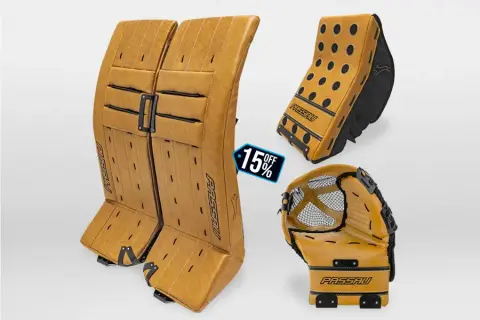
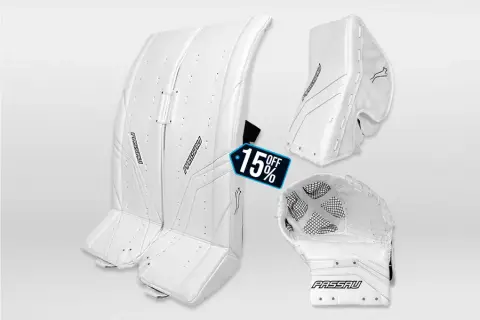
Passau builds goaltender equipment in Chambly, Quebec: leg pads, chest protectors, pants and full senior pro kits for ice and dek hockey, sold direct in Canadian dollars.
HTS 9506.99.25 · Hockey sticks and equipment · 50% since Aug 22, 2026
As of August 22, 2026, the U.S. government has implemented a new 50% tariff under Section 338 that specifically impacts importing sporting goods and equipment into the United States · passauhockey.com, Sep 9, 2026
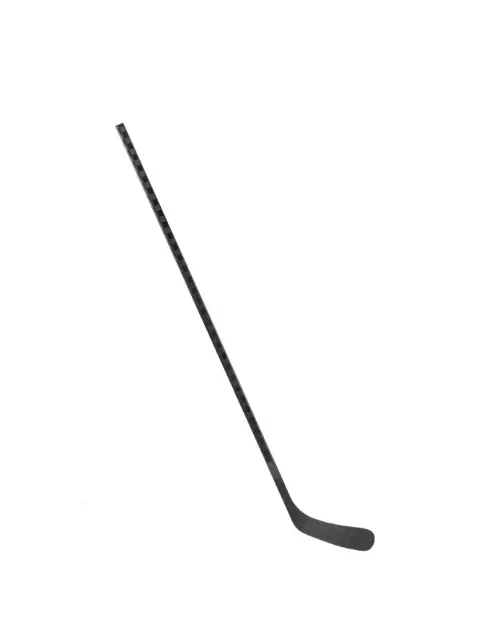
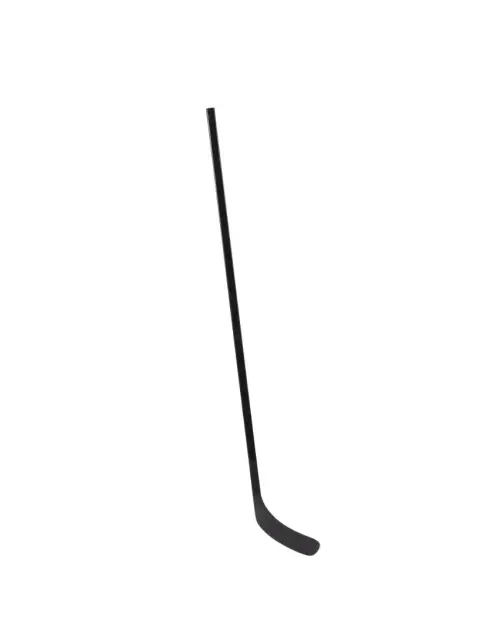
Roustan Hockey makes wood ice hockey sticks in Brantford, Ontario under the Christian, Northland and True North names, plus foam-core goalie sticks and plastic-bladed street sticks.
HTS 9506.99.25 · Hockey sticks and equipment · 50% since Aug 22, 2026
Even if somebody buys one or two or five or 10 sticks, and it's under $100, they're going to be affected by the tariffs · ttnews.com, Oct 8, 2025
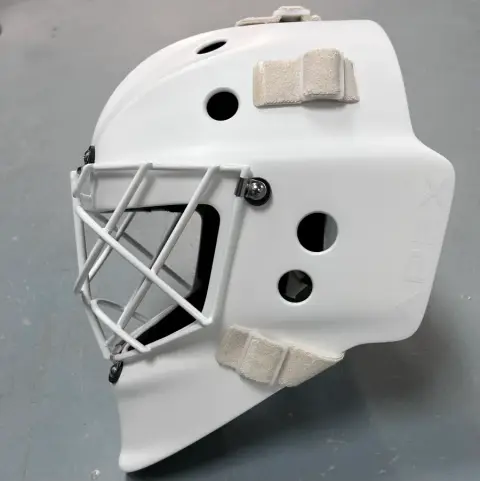
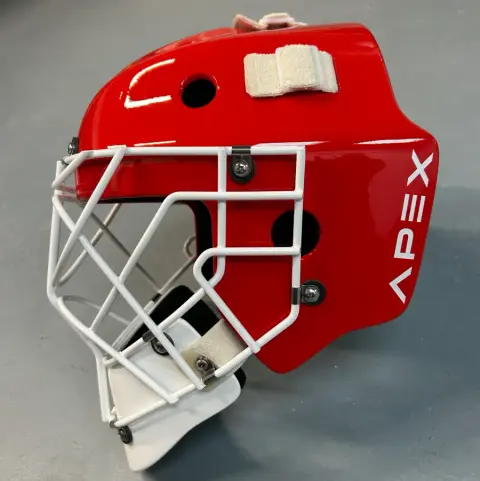
Ron Stefaniuk moulds, trims, paints and assembles fibreglass goalie masks and builds stainless steel cages for them in a Burlington, Ontario shop, sold direct to goaltenders.
HTS 9506.99.25 · Hockey sticks and equipment · 50% since Aug 22, 2026
Apex masks and cages are ice hockey equipment other than balls and skates, HTS 9506.99.25 on the CBP Section 338 list, so every mask Ron Stefaniuk ships to an American goaltender carries a 50% duty on top of the price, in effect since August 22, 2026. · content.govdelivery.com, Aug 22, 2026
10.Proclamation 11046 of July 20, 2026 (91 FR 46639) · Federal Register via GovInfo, Jul 23, 2026For example, on March 4, 2025, the Liquor Control Board of Ontario (LCBO) ceased purchasing all U.S. products and canceled existing orders where contractually possible; removed all U.S. products from wholesale product catalogues and retail eCommerce sites; and removed all U.S. products from LCBO retail stores and outlets. · read 2026-09-09
Primary sources are the documents themselves: proclamations, orders, customs notices, statutes. Secondary sources are law-firm or encyclopedia summaries we used where the original could not be read directly.
Last reviewed against the sources on 2026-09-09. The worked example uses illustrative shipping and brokerage figures; only the 50% rate is from the source.